
Come As You Are: How ACE Academy Is Building Brotherhood for Black Male Youth


There's a moment Willie Seals III describes that cuts right to the core of what The Academy for Creating Excellence (ACE) is about. A young man walks in late, maybe 9:30 or 10:00, when the program started at 9:00. Instead of a reprimand, he's greeted with warmth, “We're glad you're here. Make sure to shake everybody's hand.”
That small act, the welcome before the question, is not accidental. It is the entire philosophy of the ACE Academy lived out in a single moment.
Seals knows what it feels like to move through spaces where you don't quite see yourself reflected back. Born and raised in Seattle and a graduate of Garfield High School, he grew up inside a school system that, in his words, "wasn't necessarily hitting the mark." Not because there weren't good people, but because something essential was missing. Seals explained that “it wasn't necessarily a space of safety and a sense of belonging. I didn't really see too many educators that looked like me."
What filled that gap wasn't school. It was community represented in opportunities like the Central Area Motivation Program which provided rites of passage experiences, Upward Bound that opened up the world of college and career exploration, coaches, mentors, and the “people who showed up and stayed.”

All of these programs made a significant difference in Seals’ life, and that lived experience became the seed for ACE Academy, which he co-founded alongside Marcus Harden, and CJ Dancer, who now serves as Executive Director. What started as a Saturday program in 2012 has grown into a full organizational ecosystem now in its 14th year. ACE Academy is approaching its 10th summer learning program and has touched the lives of more than 1,500 young people and 200 educators across Seattle and South King County.
Their mission is precise and unapologetic: mentoring services for Black males ages 12 through 24, alongside programming to support and grow Black male educators. In a state where Black men make up less than 2% of the teaching workforce and where many students may never encounter a Black male teacher in their classroom, their programs matter enormously.

When you ask Seals about the program’s outcomes and what he's most proud of, he doesn't lead with test scores or graduation rates. There’s something harder to measure, and perhaps more important.
"The heart part of it really is the brotherhood and the connection. They're building friendships, lifelong friendships, that they probably would not have had if it wasn't in our space.”
What makes ACE especially impactful for Black male youth is that they can come to the academy and be exactly who they are. Some kids may have challenges but none of that defines their engagement with the academy.
"A lot of times when they are in their own school buildings, some might have an IEP or a 504. Some might have some very different challenges, but we don't look at it like that. Come into our space, come as you are and who you are. We'll learn about those things later, but we are going to treat you as human beings."
When challenges do arise, such as when a young man is struggling or acting out, the response isn't removal. It's accountability paired with genuine care,
"In this space, if there's a challenge that we see in our classroom or in our session, the first thing we're not going to do is remove you from the program or remove you from the classroom. We're going to address it right then, right there and hold you accountable to our high standard and ask, what are some areas that we can improve?"

Understanding each young person's story without judgment is central to how the academy operates. Arriving late isn’t a disruption; it is instead an opportunity to just acknowledge their presence. “It's not unnecessarily punitive,” Seals adds, "we’ll figure out why the student was late later."
That spirit of welcome is what keeps young men coming back when they’re older. The near-peer model ACE uses is one of its most powerful design choices. Seals demonstrates,
"Students who have been part of the program, like in their middle school years, we hire them back to come serve as paid interns. And then they act as the near-peer mentors for the younger guys, so they have a big brother element that's built in."
Supervising all the youth are the Black male adult educators who are either practicing teachers or facilitators. The adults model what it looks like to be “present, professional, and caring all at once.”
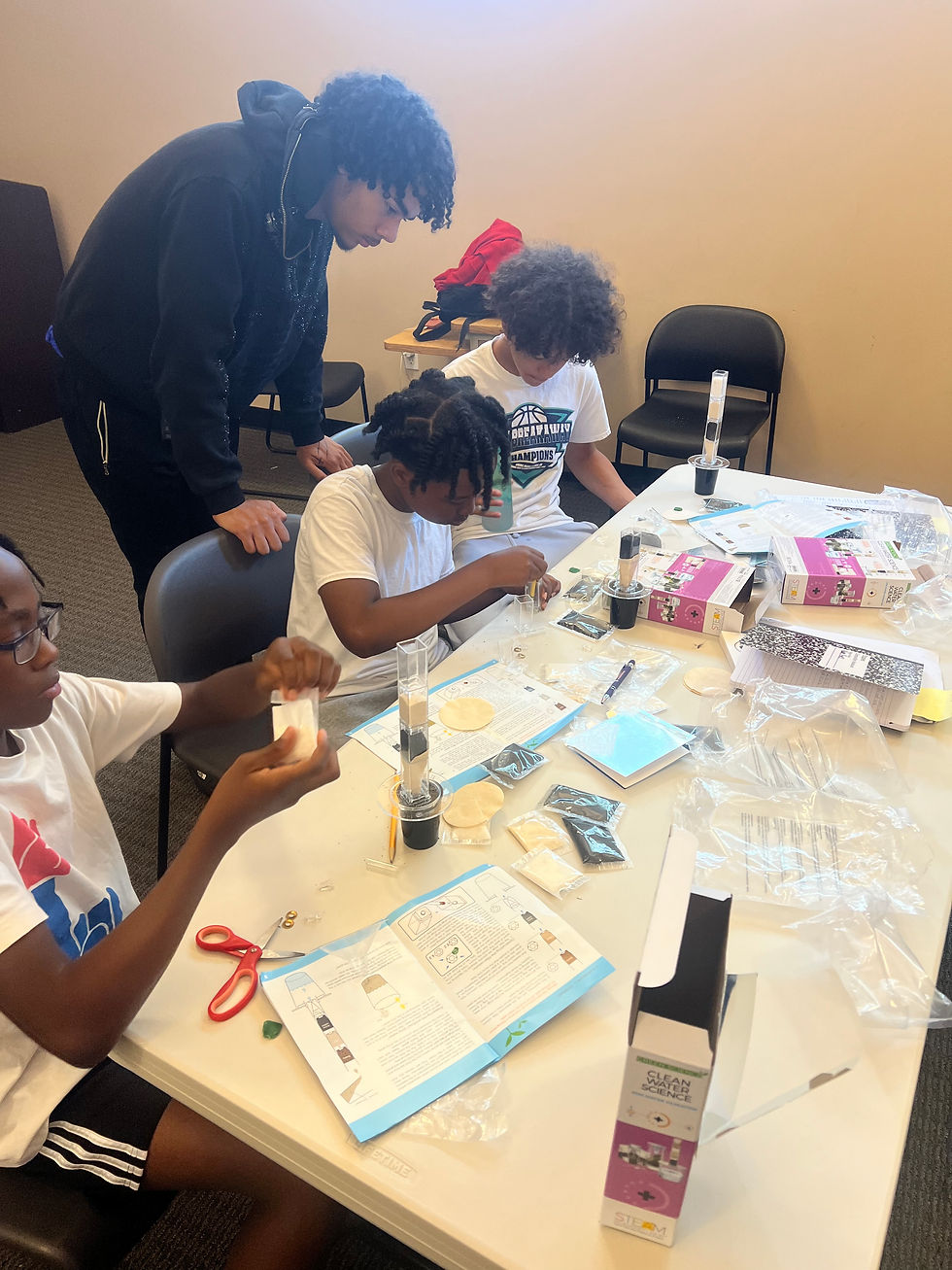
ACE Academy addresses the lack of representation in schools by hiring practicing Black male teachers to come teach in the summer program, giving young Black men a chance to build real relationships with educators who look like them. Sometimes, facilitators join their program without certifications but, because of the program, have gone on to earn their teaching credentials. Seals counts himself among those the work has propelled forward, as he is currently in his second year of working towards a doctoral degree in the Leadership for Learning program at the University of Washington.
The challenges of running an organization like ACE Academy are real. Fundraising for a niche, mission-specific nonprofit is never straightforward, and grant timelines often demand proof of impact on a compressed horizon. Willie is thoughtful and candid about this tension,
"A lot of grants are like, 'we need to see this growth pattern over six months or a year.' But no, we see it as longitudinal because that's the whole purpose of human service work. You don't necessarily see that immediate change working with young people and adults, but you'll see it over time."
There is also the ongoing work of helping the broader public understand why this mission is so specific and urgent. Seals re-emphasizes the facts,
"Less than 2% of the teaching workforce are Black male teachers in Washington state and when we drill it down to our youth who are in these K-12 systems, how many Black male teachers do they ever see in their lifetime? They may be lucky to see one. Just getting that messaging out is important, along with being able to quantify what sense of belonging and trust actually really mean, of keeping a safe space…so they [the students] are not only treated with dignity and respect, but you're also being able to channel it into growth."
The proof of that growth often shows up in who comes back. A young man who went through the program years ago recently opened his own barbershop and now returns during summer programs to cut hair for the young men coming up behind him. Former participants return as interns, as mentors, as familiar faces who still say, “Hey, Mr. Seals” when they walk through the door. Seals reminds us that “just knowing that someone cares about them and loves them for who they are” is why they keep coming back.
ACE Academy has three major gatherings on the horizon.
June 28th is their Day of Excellence 5k Walk/Run
July 31st marks the 10th year celebration of the ACE Summer Learning Experience. This event is open to any participant, educator, or partner from across those ten summers.
August 8th is the fourth annual Black Male Educator Summit.
October 24th is the organization's Night of Excellence Gala.
You can support their work by donating on their website or by following ACE Academy on Instagram @aceacademywa and Facebook and helping to spread their work.
In Seals’ words, simply sharing the work is one of the most meaningful things people can do because that's how belonging spreads—one person telling another, “I found a space where I was seen. You should come.”


