
El Centro de la Raza: 53 Years of Community, Resistance, and Welcome with Estela Ortega

Updated: Apr 15

Estela Ortega, Executive Director of El Centro de la Raza, doesn't describe her career in terms of titles or accolades. She describes it in terms of what needed to be done. "No task is beneath you," she says, "whether it's answering the phones, sweeping, mopping floors, cooking." For 53 years, Estela has shown up for El Centro de la Raza and she's still showing up.
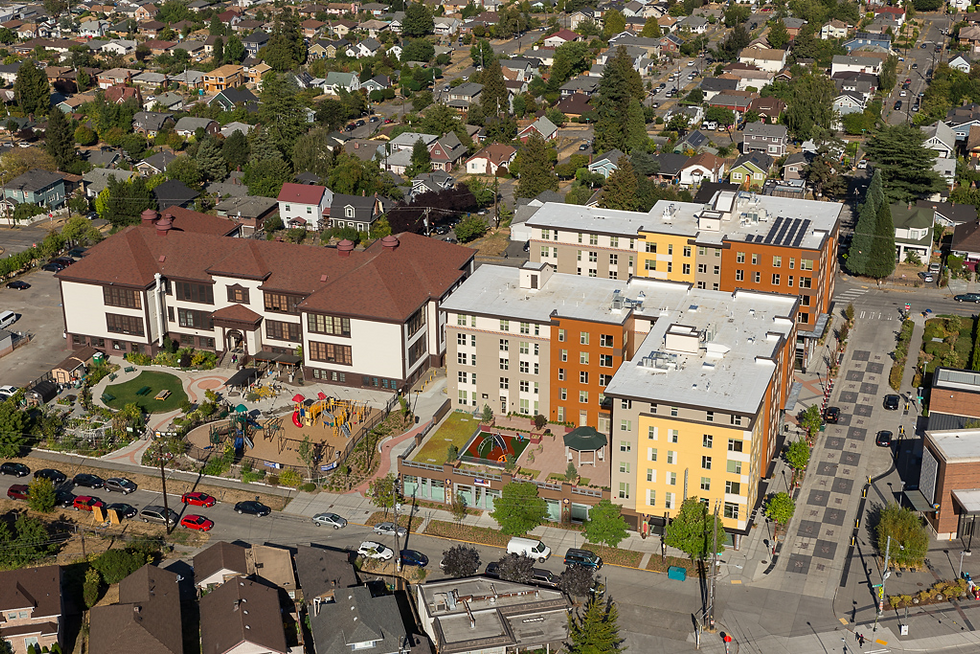
The organization began not with a board meeting or a grant, but with a peaceful occupation. In 1972, a group of community members and students took over the old Beacon Hill School, a building that had been abandoned in favor of more modern facilities. The catalyst was the Vietnam War when federal dollars that had been funding English as a second language programs were redirected to the war effort, leaving students and families without resources. But the need didn't disappear.
"People came who were looking for childcare, who were looking for employment, who were having issues within the school district in terms of discrimination. In some ways, it became like a crisis center at the same time. People were like, what are we going to do? We're established here. There's a need in the community and so people decided to stick together."
Governor Dan Evans had been encouraging communities to make use of those empty school buildings, and Roberto Maestas, along with others, heard that call. They knew occupying the building was technically illegal, but if they were shown inside and chose to stay to serve their community, that was a different story. So they stayed. Estela herself heard about the occupation at a national conference, visited toward the end of October, went home, sold her car, and never looked back.
One of the things Estela is most emphatic about is that El Centro was never just a Latine organization, even if it was Latine-led. In 1972, the Latine population of King County was roughly 25,000 people. The building would never have been turned over without the broader community that showed up alongside them.
"El Centro de la Raza was occupied and led by the Latino community, but we had immense support from communities of color, the antiwar movement, and the faith community. That building would not have been turned over to us back in 1972 because the population of Latinos was very, very small. Our strength and influence came from all those sectors. That is a debt that we will never be able to pay back because without them, there would not be an El Centro de la Raza."
That history is baked into the organization's name itself and its ongoing mission; El Centro de la Raza translates to The Center for People of All Races.
"In terms of organizing, no one person or group of people is going to do it alone. You have to have community support and not just everyday people. You've got to have support from the establishment too, in terms of city government, King County government, state government. The foundations, the banks, all of those people together play a role in helping build community. That old saying that it takes a village? Well, certainly that's what it does."
Today, El Centro serves over 20,000 individuals a year through approximately 43 programs spanning emergency human services, education, workforce development, early childhood programs, and affordable housing. What started with a budget of around $4 million in 2016 has grown to a $32 million operating budget, with a staff of 225 people.
Much of that growth traces back to their affordable housing work. El Centro developed a 112-unit affordable housing complex on their Beacon Hill property. This $45 million project became a blueprint for other communities of color across the city.
"When we finished that development, communities from all the multiracial communities, churches, ethnic chambers, came to us and said, how did you do it? So El Centro spent a lot of time educating people about that. In ten years, the Native American community, the Filipino community, other chambers, people from emerging communities have developed housing and early childhood development. We're proud that we were an example."

The ripple effect of that work, Estela says, goes beyond housing. "When you develop assets in your community, you become stronger as an organization. You're able to do more. And when you're doing good work, good things begin to happen." She points to the budget as evidence to illustrate what's possible. "I only say it because it gives you a sense of the breadth of how fast we grew and how people wanted to be a part of something good that was happening in the community."
They now have additional housing complexes around Seattle, including a recently opened development in Columbia City and another currently under construction with a legal commitment to maintain affordable housing on their properties for 99 years. Estela laughs about that one. "I was joking the other day that one of our housing developments, we have to maintain housing for 99 years. I said, at least we know we're going to be here for another 99 years for sure."
El Centro’s work has never felt more urgent. In response to the current political climate, the organization has ramped up emergency safety planning by helping families designate backup caregivers for their children, document their assets, and know their rights.
"Let's say a parent drops their kids off and goes to work. Who's going to pick up their kid? Part of that is providing an alternative person who would pick up your kid in an emergency. And what do you do with your assets? If you own a home, if you own a business, your bank account? All of those are written down and put in a safe place if something was to happen to you. That's work we did in 2016 and that we continue to do today."
Trained through WAISN, they're also organizing rapid response networks so that if immigration enforcement shows up, trained volunteers can be there immediately to record and exercise their constitutional rights. "Not only are we doing that with the staff within our buildings, but we're organizing the neighborhood also. So people who are interested in that kind of work, they need to contact us."
The fear is real and its consequences are concrete. "Sometimes people don't want to go to work because they're scared that they're going to get picked up. They don't send their kids to school. So then there becomes a need for rental assistance, a need for food." The City of Seattle has provided funding to help, and El Centro has been able to assist families in their housing complexes and beyond with rent, food, diapers, and other immediate needs. And then there's the longer game.
"In 2024, there were like 12 million people that sat out the elections. They didn't vote and look what we ended up with. We know that if we can elect the right people to office in the November elections, that's going to turn things around. We need every single person voting so that we can have a change because not only does it affect our everyday life, but the programs that people need to not just survive but to thrive in our society. Those things are at risk for our communities and every individual deserves to live a good life, a healthy life that they're thriving in their everyday life."
Whatever your background, Estela wants you to know that El Centro is for you.
"It doesn't matter what race you are. You can come and be a part of the center. We do tours for people who are just interested in the organization, the first Thursday of each month. Everybody is welcoming and I think that is the most important thing we can do. We've got to know each other, be comfortable with each other. So that we're building the unity and strength. As this administration tries to do things, we will fight for each other, understand each other."
After 53 years, that's still the mission: to help as many people as possible, together.

El Centro is having their annual Building the Beloved Community Gala on Saturday, September 26th at the Seattle Convention Center. Visit their website to learn more or to donate, volunteer, tour, rent space, sign up for their e-newsletter, or learn more about upcoming events.
Estela Ortega leads El Centro de la Raza (El Centro), a nonprofit dedicated to uniting people across racial and economic lines and standing up for those who need it most. For over five decades, Estela has poured her heart into this work, helping El Centro tackle big challenges in our region, like building Plaza Roberto Maestas, a community for people who need affordable housing in Beacon Hill. Her tireless efforts to build community and champion those on the margins have earned her well-deserved recognition from groups like the Seattle Seahawks, the National Education Association, ParentMap, and Senators Maria Cantwell and Patty Murray.


